Gender and Ethnicity in Minecraft's Player Design
Published on November 25, 2025
This article uses they/them pronouns for all skins in the game, and only uses he/him for Steve and she/her for Alex in certain contexts where the Mojang team referred to these characters with those pronouns in certain types of licensed works, just for consistency.
Steve
Steve was the first skin added to Minecraft, although it was originally used for the game “ZombieTown” that Notch was developing in early 2009, but was later used in the first builds of Minecraft to represent the player.
Steve's design is mainly derived from the skins in the video game Quake developed by id Software, where Notch drew inspiration for the creation of Steve's skin textures.[1]
The topic of whether Steve is whitewashed is frequently discussed in certain circles that analyze Minecraft's design, although it is possible that Steve is simply tanned and ethnically ambiguous if we extrapolate too much from the information we have about them (Basically, the design philosophy of making characters more ambiguous so that people from different backgrounds can identify with them). This would explain why Mojang did not maintain a consistent palette for their skin. Steve's design is based on human characters from the first Quake game released in 1996, which is generally shown with tanned skin, or at least what little can be seen in his armor besides his face sprite. Quake I does not have many human characters present, but the sequel has many more where you can see more diversity in design and skin textures (See this blog with photos of the characters).
Notch clarified on Twitter that he had regretted giving them the name Steve[2] (This was a generic name used to refer to male-presenting characters that was given by the Minecraft community in the late 2000s, but Mojang decided to make it official anyway, going against its current design philosophy at the time of making skins as blank canvases/models where everyone could be represented).
This is possibly one of the reasons why Mojang's creative team decided to remove Steve's goatee in the implementation of Java Edition Classic 0.28 in 2009. It wasn't until 2022 that Mojang's creative team decided to bring Steve's beard back, according to information provided by Jasper Boerstra, art director of Minecraft.[3]
Throughout the 2010s, Minecraft would reach its peak in popularity, yet Mojang did not attempt to add new default skins to the game. But during that same time period, 4J Studios, the team responsible for porting Minecraft to consoles, initially had a different design philosophy than their Swedish counterparts.
Instead of creating new characters, the team behind 4J Studios decided to adapt Alex and Steve's designs to different themes. Among the best known are Alex wearing the national dress of Sweden, in reference to Mojang being based in Stockholm, and Steve wearing a Highland dress with a kilt, in reference to 4J Studios being based in Glasgow.
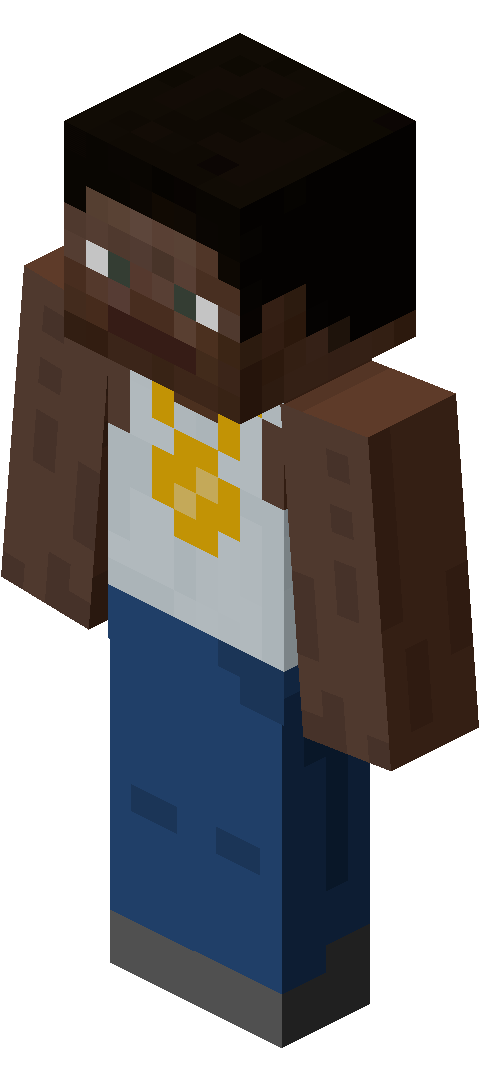
In 2012, 4J Studios released new skins for Steve. Notably, the “Steve Athlete” skin caused quite a stir in forums of that era, including GameFaqs and Minecraft Forum,[4] where certain users interpreted the description as somewhat “stereotypical” of certain African American communities, with some people interpreting the medal as a gold chain (And some intepretations say the skin model looked like CJ, the protag of GTA San Andreas). It should be noted that when 4J Studios designed these skins, the London Olympics were being held in their home country, so it is understandable that they tried to represent different ethnicities for an international sporting event. However, the execution was not perfect, and the basic look of the skin could send the wrong message of a “gangster” depiction without the appropriate context. Although I highly doubt that was 4J's intention and it was just a misunderstanding, as well as the limitations of that era in designing skins, making the original message of the skin for Steve a little less clear in representing Olympic athletes.
That being said, around 2022 (Note: The story is somewhat convoluted, and I have found reports from users talking about how Mojang had removed certain skins from the pack in 2019). Apparently, the pack had been pulled off the Bedrock Marketplace several times, but it wasn't until that year that it gained some traction in social media), Mojang removed the Athlete skin for Steve from the Bedrock marketplace, possibly to comply with its new policies on ethnic group representation (See clauses MCR-208 on Diversity in the document “Minecraft Marketplace Brand Guidelines” § Minute 11:12). This skin pack was originally released for Bedrock in 2017 and included all the Steve variants created by 4J.
--[Note: Semi dubious source (!) since there's not really much official documentation about this in the Bedrock Marketplace and it's a Reddit comment from a deleted user, so take it with a grain of salt and see the other posts attached to the Reddit Comment for more information] via r/Minecraft from the post "Has Microsoft removed black Steve from the skin pack?" (2022)
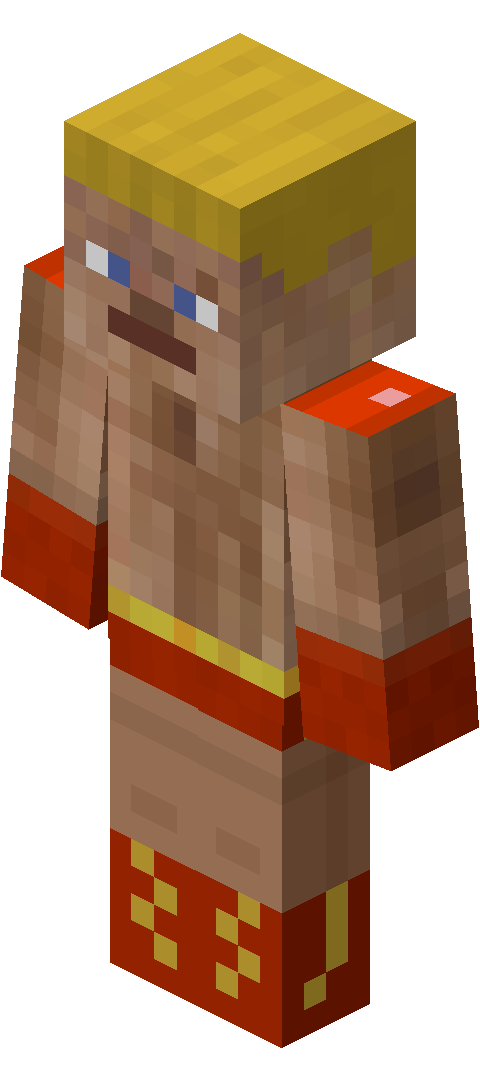
Even so, saying that the Legacy Skin Pack can be summed up like this is not enough. 4J Studios also set out to create a variant of Steve's skin to represent boxers, with the designers apparently taking some inspiration from the character of Ivan Drago from the 1980s movie Rocky IV. This film was produced during the Cold War and openly commented on the clashes between the United States, represented by Rocky Balboa, and the Soviet Union, represented by Ivan Drago. That is why much of its color palette features yellow and red clothing, which is something that 4J Studios attempted to replicate as “Boxer Steve”.
From an artistic point of view, it is understandable why 4J Studios tried to use this as the basis for the model for this variant when the Olympic Games were held in the UK this year, taking an iconic film from the 20th century and specifically basing it on a fictional athlete from Eastern Europe to provide variety to the ethnic background of the multiple athletes at the Olympic Games.
Alex
Mojang first revealed Alex's skin in August 2014 as part of “The Bountiful Update”.[5] In the same month, the page about “Skins” within Mojang Support was changed to mention the addition of Alex.
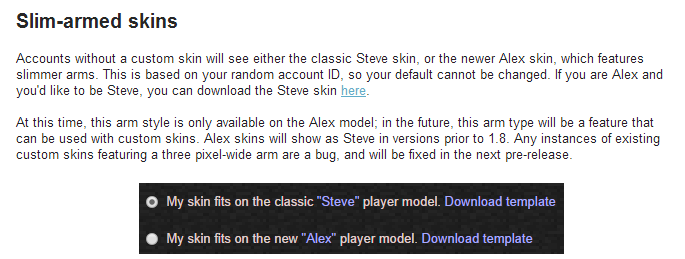
One of the reasons why the name Alex was chosen is because it is a unisex name. On multiple occasions, Mojang has referred to Alex using feminine pronouns, even though her appearance was based on that of Jens Bergensten. It should be noted that the skin was designed when Mojang had been partially restructured after being bought by Microsoft that year, and Jens had a different design perspective. In this case, Alex's skin was originally designed to provide an alternative to Steve's standard design, so to speak, another blank canvas where players regardless of gender could represent themselves, featuring different traits that were not present in Steve's skin, such as long hair and a slightly thinner complexion (just when Alex was introduced to the game, Mojang added options to change the skin's body). Even so, in 2014, Mojang's website simply referred to these skins as “Alex Model” and “Steve Model” instead of ‘Female’ and “Male”, and it was only a year later, after press releases, that the media began to characterize Alex as the female representation of the game instead of another blank canvas, as previously mentioned.
The first time Mojang referred to Alex with she/her pronouns was during the press release for “New skins! Achievements! Music!” written by Owen in April 2015.
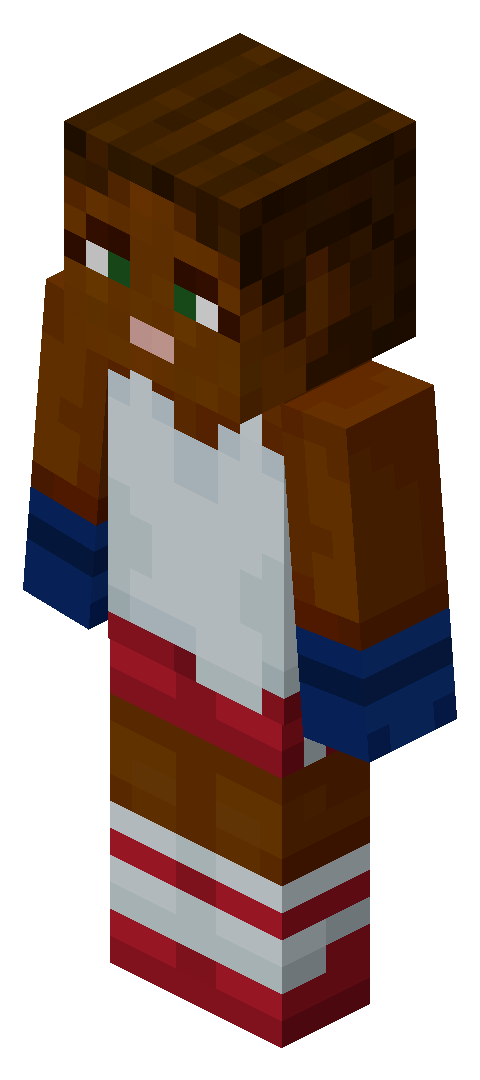
4J Studios released several Alex skins in April 2015, just nine months after the original release of the model in Java Edition in August 2014.[6] 4J Studios decided to create a counterpart to the themes previously used for Steve in 2012, resulting in skins inspired by athletes. The 4J team decided to incorporate a skin dedicated to representing black athletes, this time being a little more realistic than just color swapping, giving it a more defined tone as well as African braids for the “Boxer Alex” skin.
An interesting detail about this skin is that the boxer's color palette uses only red, blue, and white, the colors of the United States flag. We had previously clarified that 4J Studios had based the variant of this skin for Steve on Ivan Drago, a fictional Soviet athlete, so it would make sense that Alex's counterpart would represent the other side of the coin with this design inspired by American athletes.
The 2020s Skin
In 2022, Minecraft will introduce more default skins to the game, mainly to provide more diversity, including POC characters. Some of the skins were designed by Dutch artist Jasper Boerstra, also known as JAPPA, with the skins for Sunny, Noor, and Efe having been revealed earlier in the promotional trailers for The Wild Update compared to the rest.
East African Etymology
Among the models added is Zuri, whose name originates from Swahili and is one of the gender-neutral names commonly used in East Africa as well as the Black diaspora in the US and Canada.[7]
Zuri would not be the only skin with East African ancestry to be added; there is also Makena, whose name has its roots in the Kĩkũyũ communities in Kenya, and is another gender-neutral name of African origin.[8]
It is interesting to see how Mojang has focused on providing representation for this specific part of Africa. While researching the impact of Minecraft in Kenya, I observed how local communities were using Minecraft for urban planning, including Block By Block, which was started in 2012 to help people in Nairobi.
Sunny
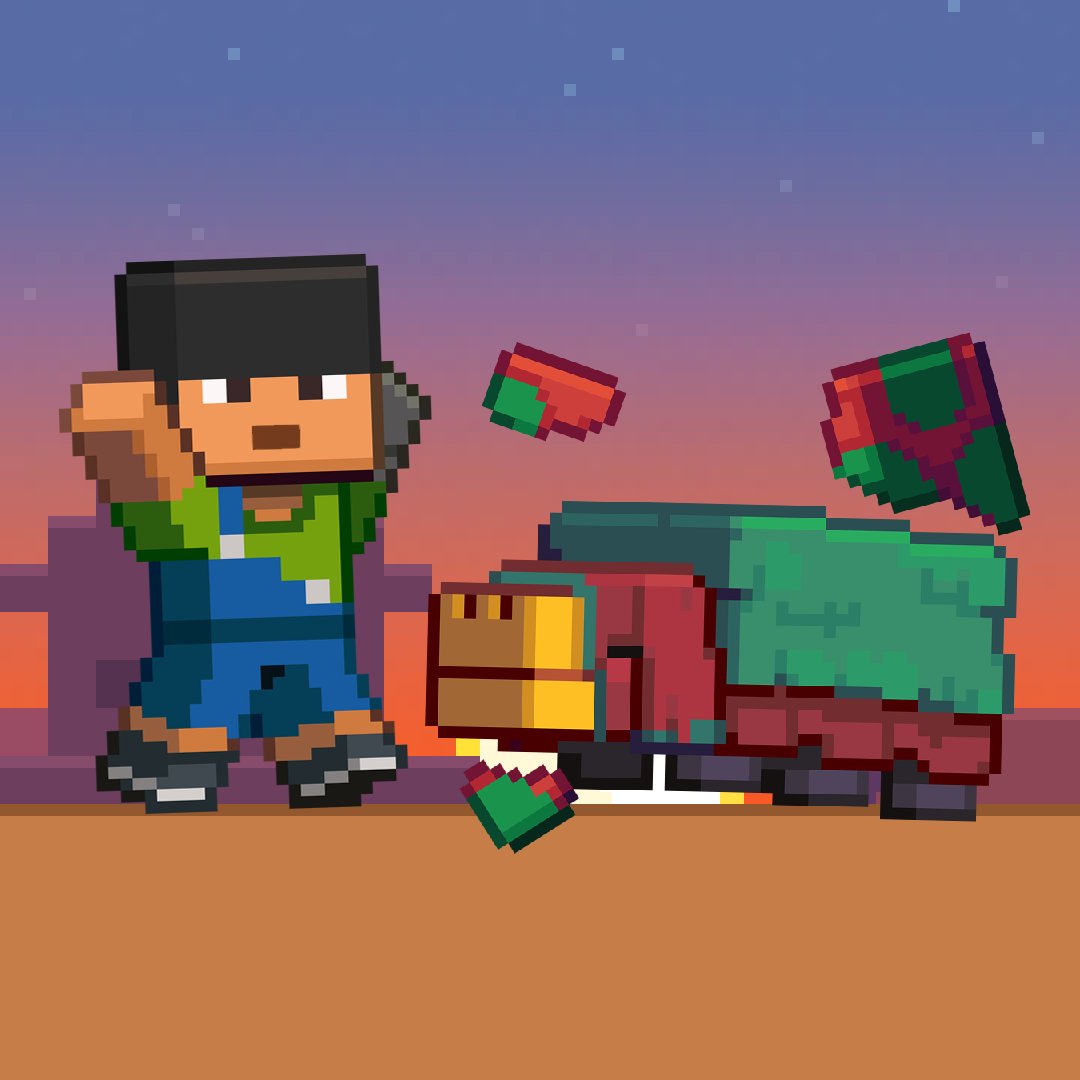
Sunny's design is quite unique among the default skins in that it has a prosthetic arm,[9] one of Mojang's possible attempts to include representation for people with disabilities.
When reviewing some information about this skin, there is a bug report on the Mojira page indicating that changing certain aspects of the skin in the beta where new designs were introduced would sometimes cause Sunny's prosthetic arm to disappear. Sunny's prosthetic arm is part of their default design rather than being a separate arm piece.[10] Mojang Staff marked as “Working as Intended”
Although Sunny has been an interesting approach to the default skin design by giving it a unique feature, we must take into account Mojang's precedents. The first additions of prosthetic arms and legs in Minecraft can be linked to the Bedrock Character Creator, where Mojang introduced them in late 2019.[11]
Noor
Another skin that stands out in the new catalog provided by Mojang is Noor, which has a unisex name of Arabic origin meaning “light”.[12] This name is used by many women and men across various countries, from Jordanian royalty to South Asia, Sub-Saharan Africa and the Malay Archipelago.
According to Forebears.io, which tracks the popularity of common names, Noor is commonly used in Malaysia, Indonesia, Pakistan, and India, as well as certain parts of East Africa such as Somalia, Kenya, Ethiopia, and Sudan.[13]
Within the countries mentioned above, Noor's design represents certain style trends in Sub-Saharan Africa, notably due to the use of braided hairstyles. When creating these characters, Mojang decided to use gender-neutral names and clothing so that players from different backgrounds could use them comfortably. Upon researching unisex hairstyles and how they relate to African braids, it is a common cultural debate in certain parts of Africa.
Among the reports on the subject, there is a short video by CGTN Africa, a Chinese state media outlet with different editions dedicated to certain parts of the Global South, about how men in Jos, a city located in northern Nigeria, were increasingly wearing braided hairstyles, which certain sectors of Nigerian society considered typically associated with women. The section of the report was interesting, with some users pointing out that it was a “colonial mindset” that men should not wear long, stylish hairstyles and that braided hairstyles should be adopted regardless of a person's gender.[14]
Kai
A little research into the origin of the name Kai reveals that it is used in many cultures, from the West to the islands of Polynesia, including Hawaii, which is a unisex name. In addition, Kai is used as a unisex name in certain places in East Asia, such as Japan, within the writing systems used in Japan, Kai can be written as 快 in Kanji, かい in Hiragana, and カイ in Katakana.
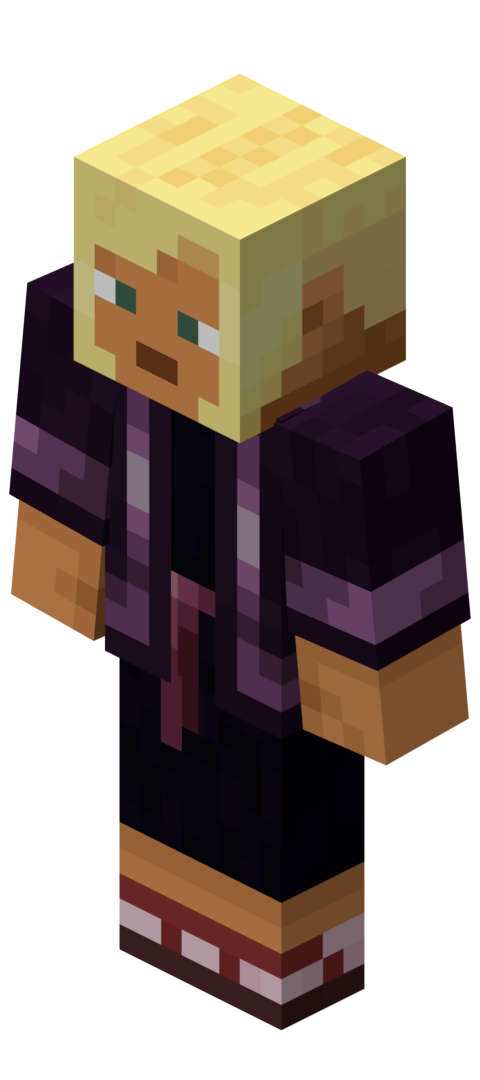
Kai's basic design features a casual dark magenta sash, also known as an obi in Japan. Obi belts have inspired fashionistas in both the East and the West. According to DAL Collection, a California-based clothing store that has adapted the Obi belt for American audiences, the presence of this garment in Japanese fashion is explained by quoting “it is much more than just a sash. Depending on the obi type, it can elevate the kimono from casual to highly formal”.[15]
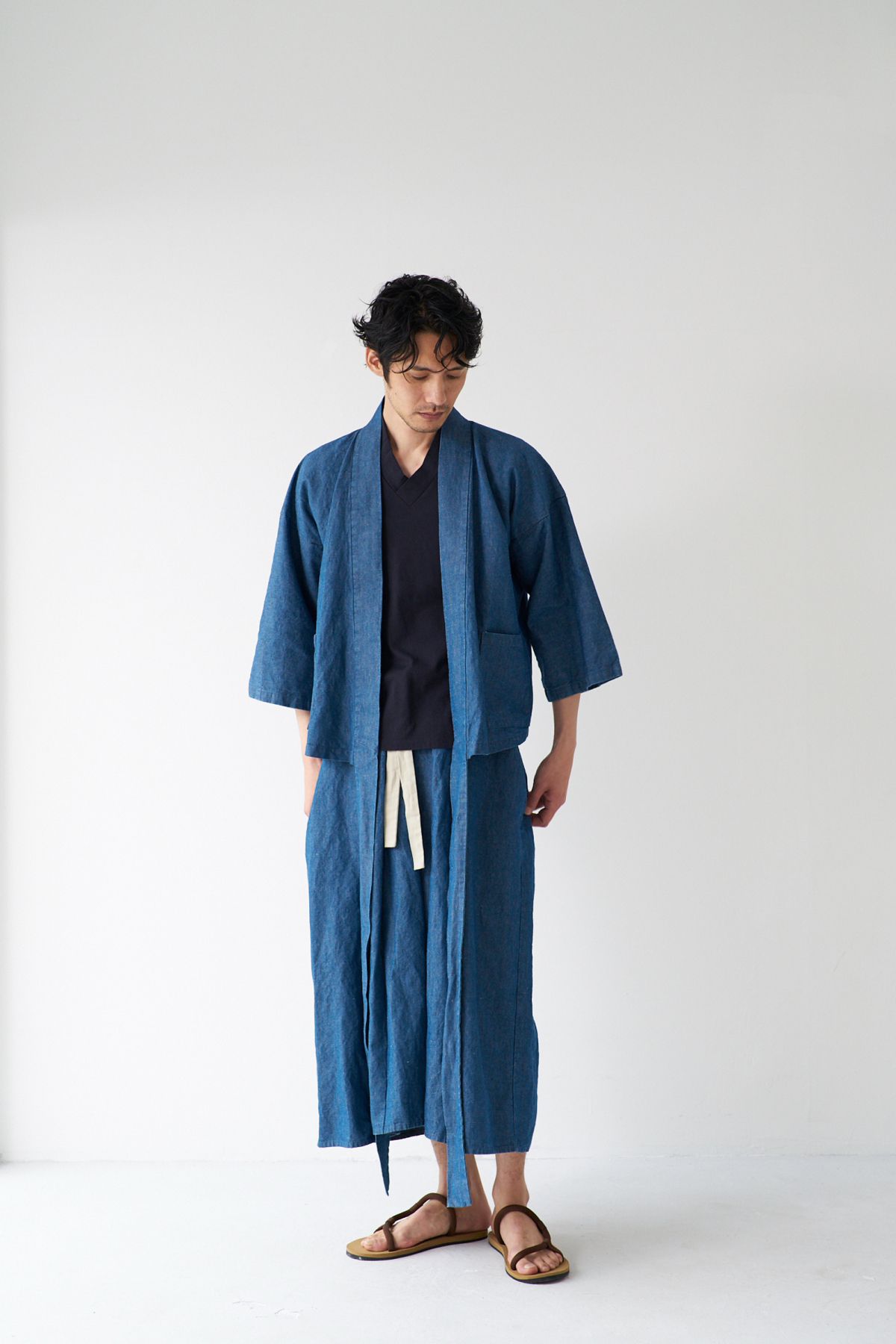
For the rest of the outfit, I decided to look into unisex fashion in Japan. SoraNews had previously published an article about how the Japanese brand “Trove” was designing a unisex line based on traditional Japanese clothing, and you can see certain similarities with Kai's standard design.
References
Notch (2022) "That's my understanding as well. Oh and steve's face was inspired by the quake character skin." via Twitter
Notch (2012) "Gender in Minecraft" Tumblr Archive
JAPPA (2022) "The new Steve & Alex textures are in the Launcher Beta, all of the issues they have regarding UVs will be fixed among some potential texture adjustments to address your feedback." via Twitter
"Athlete Steve? Really?" (Xbox Edition) (2012) via The Minecraft Forum
Jens (2014) "Minecraft 1.8 Pre-release – The Bountiful Update" Mojang Official Website
Paddy Burns (Padware) "MCXBLA Title Update change logs" (See Change log for Title Update 24 - April 29th 2015) Minecraft Forum
"The Name Zuri: Beautiful" FirstNames Blog
Makafui, Etse (2024) "African Personal Names: An Introduction to Their Historical and Cultural Significance" AuthorHouse. ISBN: 9798823016735
JAPPA (2022) Is Sunny's left arm prosthetic?" Twitter
"Sunny's prosthetic arm is not a separate piece" (2022) Mojira
Prosthetic Arm BedrockExplorer
"Meaning of the name Noor" Wisdom Library.
"Noor" Forebears.io
"Mixed reactions in Nigeria as more men embrace braided hair" (2025) CGTN Africa via YouTube
Walther, Anna "Ada’s Inspiration for the Wrap Belt: The Japanese Obi Belt" Ada Collection (Note about this source: Promotional/Commercial Website)